
Industry 08 / 11 · Telecoms
Five-nines uptime at every tower.
Resilient battery cabinets for cell sites and exchanges that ride through outages and cut the cost of diesel service visits across the whole estate.
- 99.999%availability target supported
- Fewerdiesel refuelling site visits
- Fleet-wideremote diagnostics
Overview
Thousands of sites. Every one has to stay on.
Tower estates rely on lead-acid batteries and diesel at remote sites that are costly to visit. Batteries age unseen, generators need regular refuelling, and an outage at a single site affects thousands of customers.
EMS lithium cabinets give longer backup in a smaller footprint, recharge from the grid or solar PV, and report health across the whole estate so maintenance is planned rather than reactive.
-
01Lead-acid batteries failing without warning
Lithium cells with per-module health monitoring
-
02Frequent diesel visits to remote towers
Battery storage cuts generator runtime and refuelling
-
03No visibility across thousands of sites
Fleet-wide 4G monitoring with predictive alerts
-
04Vandalism and theft at unmanned sites
Vandal-resistant IP67 enclosures with tamper alarms
EMS Energy Intelligence
Storage that thinks ahead.
Smart energy management that learns how your telecoms site uses power and plans every kilowatt ahead of the peak.
- Load forecasting
- Smart dispatch
- Predictive health
- Fleet-wide visibility
- Grid outage at site TX-0418. Running on battery, 9 h 40 m autonomy remaining.
- String 3 at site NW-221 shows rising resistance. Swap scheduled with next visit.
Applications
Where EMS works in telecoms.
Resilient distributed storage cabinets engineered for nationwide cellular rollouts, ensuring 99.999% communications uptime while reducing expensive diesel generator service runs.
-
01
Macro cell sites
Long-duration backup and hybrid power for towers.
-
02
Fibre exchanges
Resilient storage for regional exchanges and POPs.
-
03
Remote towers
Storage that rides through outages where grid supply is weak.
-
04
Temporary coverage
Mobile power for cells-on-wheels at events and emergencies.
Recommended systems
Built for telecoms.
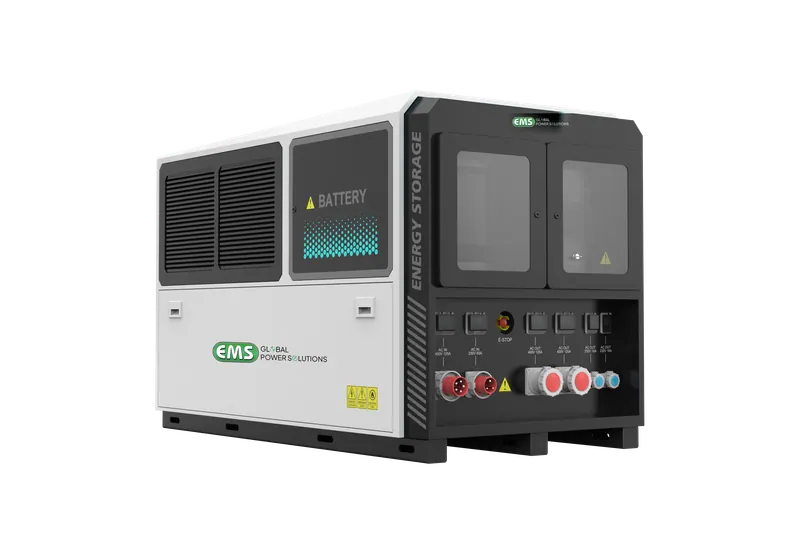
The EMS systems our engineers most often specify for this sector. Typical configuration: C-Cabinets · Regional Arrays.
Size your system
A first estimate, in seconds.
Move the sliders to match your site. We’ll suggest a starting storage size and system, using typical figures for telecoms. An engineer then refines it with your real load data.
- Free, no-obligation load assessment
- Sizing modelled on your real demand profile
- Proposal with options and expected savings
Deployment
From first call to first power.
A clear, managed path with one UK team accountable from assessment to long-term support.
-
1
Week 1
Site & load assessment
We review your site, load profile and energy sources, remotely or on site.
-
2
Week 2–3
System design & sizing
Engineers model the load, size storage and choose the right EMS systems.
-
3
From 4 weeks
Delivery & commissioning
Units arrive pre-integrated, connected and commissioned by our team.
-
4
Ongoing
Monitor & optimise
Live monitoring, smart dispatch and 24/7 UK engineering support.
FAQ
Questions from telecoms teams.
Can’t see your question? Our engineers answer within one working day.
How long can a site run on battery?
Autonomy depends on site load and the cabinet configuration. We size each design to your required backup time, typically several hours to a full day for macro sites.
Can it replace lead-acid strings?
Yes. Lithium cabinets offer more usable capacity in a smaller footprint, longer life and continuous health reporting.
Can it work at sites with weak grid supply?
Yes. iCabinet recharges from the grid or solar PV and runs equipment from its industrial outlets, so it can ride through interruptions at remote sites.
How do we monitor a large estate?
Every cabinet reports over 4G to a single dashboard, with alerts and health trends across the whole tower portfolio.
Keep exploring
Other industries.
- 01 ConstructionSite cabins, tower cranes & heavy machinery
- 02 MiningOpen-pit & underground operations, camps & plant
- 03 Fleet & TransportationCommercial fleets, transit bus depots & logistics
- 04 Airports & PortsApron GSE, quayside cranes & electric vessels
- 05 Commercial & IndustrialManufacturing, warehousing & logistics hubs
- 06 Fuel ForecourtsMotorway services, retail fuel stations & EV hubs
- 07 Data CentresHyperscale, colocation & edge facilities
- 09 HealthcareHospitals, surgical clinics & emergency care
- 10 Remote & Off-GridExpedition camps, eco-resorts & isolated facilities
- 11 UtilityNetwork operators, IPPs & grid services
Start with the challenge
Tell us what the site
needs to do.
Share the location, the load and what is getting in the way. Our team will help you work out which system, and how many, the job needs.