
Industry 03 / 11 · Fleet & Transportation
Fast charging that comes to the fleet.
Mobile DC chargers and charging robots that bring energy to parked buses, vans and taxis, so the depot electrifies without waiting for a grid upgrade or digging up the yard.
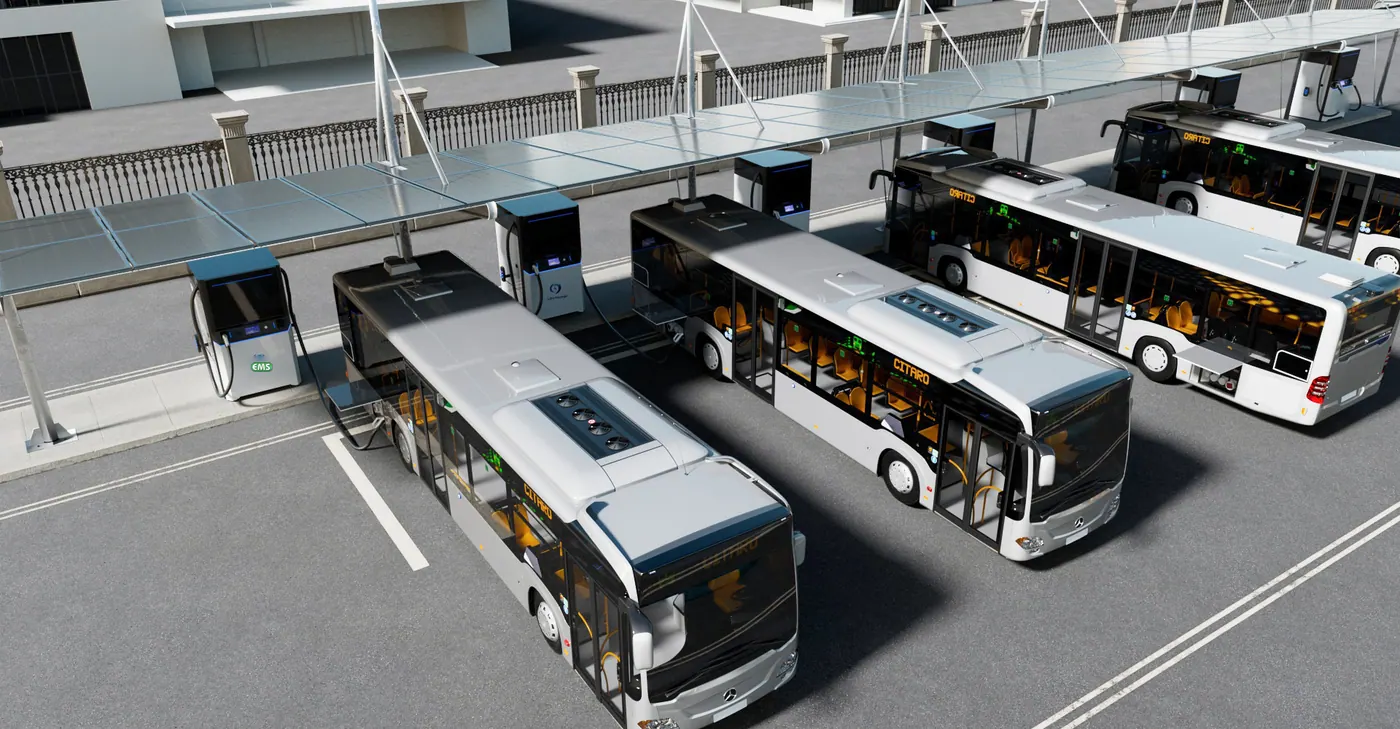

- Up to 360 kWDC charging from mobile units
- 0trenches or fixed bays required
- Overnightcharging scheduled to cheapest tariff
Overview
Fleets go electric faster than depots can be rewired.
Every fixed charge point needs a bay, a cable run and grid capacity. Many depots hit their connection limit after a handful of chargers, and reinforcement can take years.
EMS mobile chargers and robots take the charger to the vehicle. Battery storage buffers the grid connection so more vehicles charge at once, and smart scheduling fills batteries when power is cheapest.
-
01Depot grid connection maxed out after a few chargers
Battery buffer multiplies available charging power without reinforcement
-
02Civil works and dedicated bays for every charge point
Mobile chargers and robots serve vehicles where they park
-
03Peak-time charging driving up energy bills
Scheduling shifts charging to off-peak hours
-
04Vehicles not ready for the morning roll-out
Live state-of-charge per vehicle with alerts before departure
EMS Energy Intelligence
Storage that thinks ahead.
Smart energy management that learns how your fleet & transportation site uses power and plans every kilowatt ahead of the peak.
- Load forecasting
- Smart dispatch
- Predictive health
- Fleet-wide visibility
- 42 vehicles plugged in. All at 100% by 05:10, ahead of 05:30 roll-out.
- Charging shifted to 00:30–04:30 off-peak window. Saving est. 31% on tariff.
Applications
Where EMS works in fleet & transportation.
High-power DC mobile chargers and autonomous robotic charging units that bring fast energy directly to parked vehicles, avoiding million-pound civil groundwork for dedicated charging bays.
-
01
Bus & coach depots
Overnight and opportunity charging for transit fleets.
-
02
Delivery & logistics vans
Charge last-mile fleets in yards with no fixed infrastructure.
-
03
Taxi & car-park fleets
Charging robots drive to the vehicle, no fixed posts needed.
-
04
Heavy goods vehicles
High-power DC for e-HGVs at hubs and temporary sites.
Recommended systems
Built for fleet & transportation.
The EMS systems our engineers most often specify for this sector. Typical configuration: 120 kW – 360 kW DC Fast Charging.
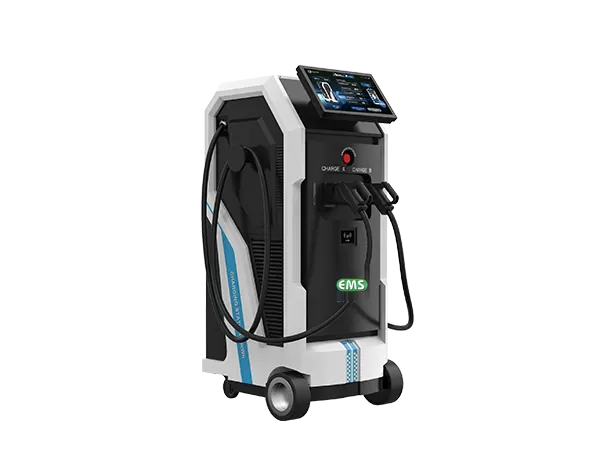
iMChargerX
Movable DC fast charger
DC output
60 kW or 2 × 30 kW
Screen
21-inch touchscreen
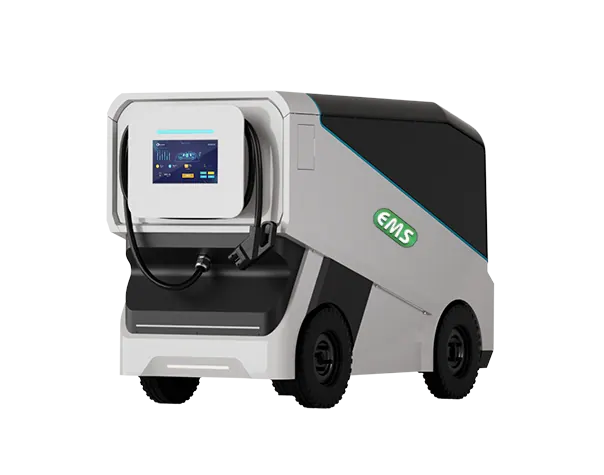
iMSmart
Remote-controlled charging robot
Battery
104 kWh
DC output
60 kW
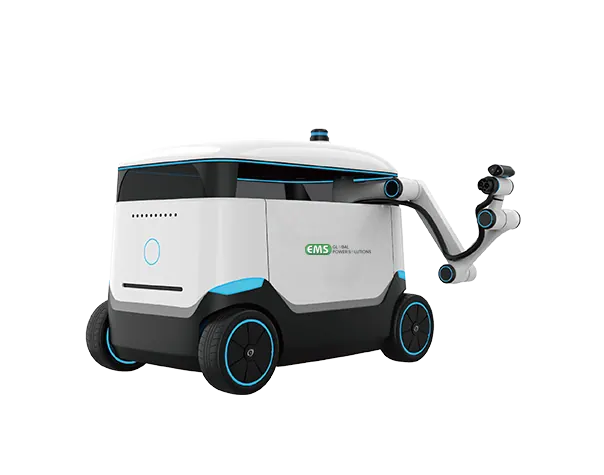
iACharge
Automatic charging robot
Battery
106 kWh
DC output
80 kW
Also used: iMContainer
Size your system
A first estimate, in seconds.
Move the sliders to match your site. We’ll suggest a starting storage size and system, using typical figures for fleet & transportation. An engineer then refines it with your real load data.
- Free, no-obligation load assessment
- Sizing modelled on your real demand profile
- Proposal with options and expected savings
Deployment
From first call to first power.
A clear, managed path with one UK team accountable from assessment to long-term support.
-
1
Week 1
Site & load assessment
We review your site, load profile and energy sources, remotely or on site.
-
2
Week 2–3
System design & sizing
Engineers model the load, size storage and choose the right EMS systems.
-
3
From 4 weeks
Delivery & commissioning
Units arrive pre-integrated, connected and commissioned by our team.
-
4
Ongoing
Monitor & optimise
Live monitoring, smart dispatch and 24/7 UK engineering support.
FAQ
Questions from fleet & transportation teams.
Can’t see your question? Our engineers answer within one working day.
Do we need to upgrade our grid connection?
Often not. A battery buffer charges steadily from your existing supply and releases power at high rates when vehicles need it, so more vehicles charge simultaneously within the same connection.
How do charging robots work?
iMSmart and iACharge carry their own battery to the parked vehicle and connect to it, so car parks and depots need no fixed charge posts.
Will it work with our fleet management software?
Units are OCPP-compliant and report charging data so it can be integrated with common fleet and depot management platforms.
Which connectors are supported?
CCS1, CCS2, CHAdeMO, NACS and GB/T options are available, so mixed fleets can charge from the same equipment.
Keep exploring
Other industries.
- 01 ConstructionSite cabins, tower cranes & heavy machinery
- 02 MiningOpen-pit & underground operations, camps & plant
- 04 Airports & PortsApron GSE, quayside cranes & electric vessels
- 05 Commercial & IndustrialManufacturing, warehousing & logistics hubs
- 06 Fuel ForecourtsMotorway services, retail fuel stations & EV hubs
- 07 Data CentresHyperscale, colocation & edge facilities
- 08 TelecomsCell towers, tower companies & fibre exchanges
- 09 HealthcareHospitals, surgical clinics & emergency care
- 10 Remote & Off-GridExpedition camps, eco-resorts & isolated facilities
- 11 UtilityNetwork operators, IPPs & grid services
Start with the challenge
Tell us what the site
needs to do.
Share the location, the load and what is getting in the way. Our team will help you work out which system, and how many, the job needs.